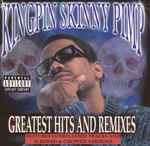
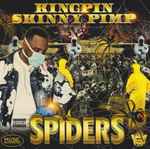
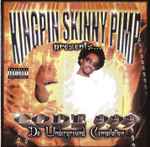
Kingpin Skinny Pimp
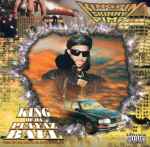
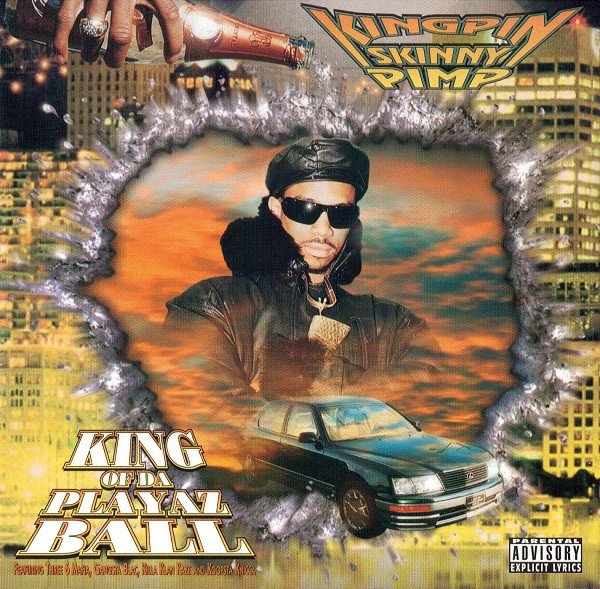
North Memphis rapper Derrick Hill, an early Three 6 Mafia affiliate known for “Lookin’ for da Chewin’” and the 1996 Prophet release “King of da Playaz Ball.”
Dixie Homes
Kingpin Skinny Pimp, born Derrick Dewayne Hill, grew up with his grandfather in the Dixie Homes projects of North Memphis and started rapping around 1985 while at Herman Junior High. He has cited the Fat Boys and local acts such as 8Ball & MJG as early influences.
Tape era
After school he made tapes with producer DJ Squeeky, whose SP-1200 beats set a template for Memphis gangsta rap. Their 1993 track “Lookin' for da Chewin'” became Skinny's signature, and its beat inspired one of Juicy J's best-known underground hits. That year he also recorded “Pimps & Robbers” with 211 for Outlaw Records. Linking with DJ Paul and Juicy J, he appeared on several songs on Three 6 Mafia's 1995 debut “Mystic Stylez,” and he has said he traded production ideas with the pair in those years.
“King of da Playaz Ball”
His solo debut “King of da Playaz Ball” was issued by Prophet Entertainment in April 1996, produced by DJ Paul and Juicy J and including a new version of “Lookin' for da Chewin'.” With no radio support it sold more than 60,000 copies. He parted with the Three 6 camp in 1996 and kept releasing independently, including “Skinny But Dangerous” (1996), “Back to tha Playaz Ball” (2000), “Da Product Vol. 1” (2001) and “Pimpin & Hustlin” (2002), later aligning with Lil' Flip's Clover G'z label. He also produced early material for a young Yo Gotti, then recording as Lil Yo.
Phonk revival
Decades later his voice and tapes became favored sample sources in the global phonk wave. Tracks built on his material, such as Lxst Century's “Odium,” gathered tens of millions of streams, and Rolling Stone reported on how TikTok carried the veteran's catalog to a new international audience.
Watch