Rick Ross
Carol City rapper whose 2006 debut “Port of Miami” opened at number one, and who later built Maybach Music Group around his luxury-minded, heavily produced records.
Origins
Rick Ross was born William Leonard Roberts II on January 28, 1976, in Clarksdale, Mississippi, and grew up in Carol City in northern Miami-Dade County. He attended Miami Carol City Senior High School and went to Albany State University in Georgia on a football scholarship. Between 1995 and 1997 he worked as a correctional officer for about 18 months, a job that became a subject of debate after he became famous for drug-dealing narratives.
Breakthrough
Roberts first recorded as Teflon Da Don and spent time with Suave House before joining Miami’s Slip-n-Slide Records, the label of Trick Daddy and Trina. In early 2006 his single “Hustlin’” spread through Miami clubs and radio. It reached number 54 on the Hot 100, was later certified double platinum, and led to a Def Jam deal signed under Jay-Z. A remix of “Hustlin’” added verses from Jay-Z and Young Jeezy.
Key records
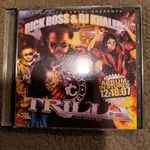
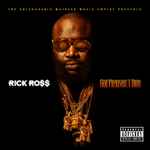
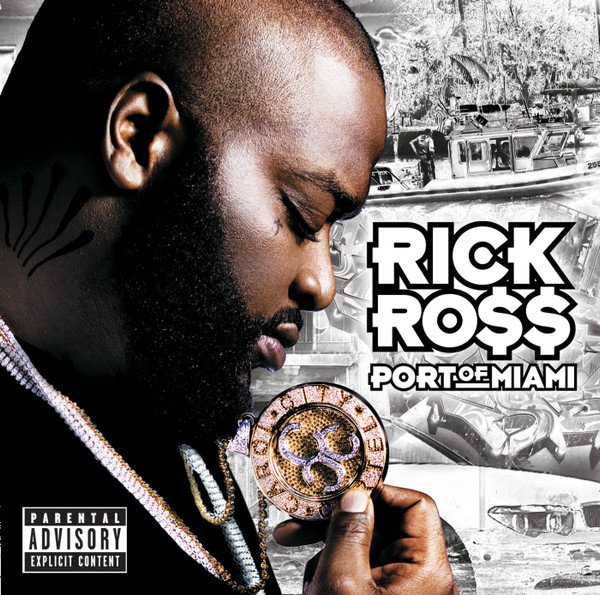
“Port of Miami” (2006), released through Slip-n-Slide, Poe Boy and Def Jam, debuted at number 1 on the Billboard 200 with 187,000 copies in its first week and was later certified platinum. “Trilla” (2008) and “Deeper Than Rap” (2009) also opened at number 1, giving him three consecutive chart-topping albums. “Teflon Don” (2010) reached number 2 and included “Aston Martin Music” with Drake and Chrisette Michele, which reached number 30 on the Hot 100 and went triple platinum. “God Forgives, I Don’t” (2012) sold 218,000 copies in its first week and reached number 1, as did “Mastermind” (2014).
Later career and legacy
Ross founded Maybach Music Group, which signed Meek Mill and Wale and became one of the most visible rap labels of the 2010s. He has received nine Grammy nominations, and The Source named him its Man of the Year in 2010 and 2011. Outside music he became a franchise owner of Wingstop restaurants. His slow, heavy production choices and booming delivery made him the most commercially successful rapper to come out of Miami’s street scene. He moved the city’s sound away from the fast party records of the bass era toward a heavier, cinematic style tied to the drug trade imagery of 1980s Miami.
Watch
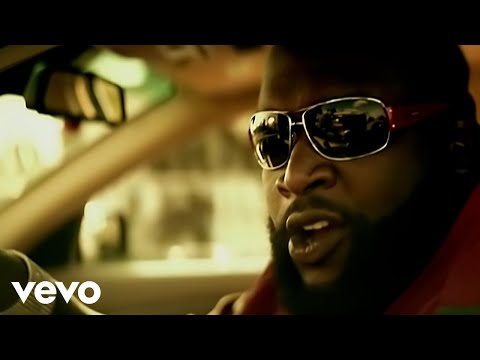


Discography
Studio albums 8





Collaborative albums 30

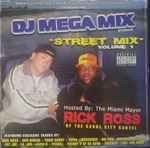

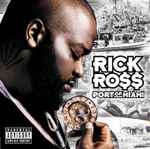









EPs & mixtapes 21









Albums on Breakbeat Archive
Know something we don't?
Suggest a correction
Have a flyer, tape cover or photo of Rick Ross?
Are you Rick Ross? Claim this page
Put this page on your site
Artists, fans and blogs: link this page with the badge or the card. Copy the code and paste it into your site.
Badge

Card


