Schoolly D
West Philadelphia rapper whose reverb-soaked 1985 single “P.S.K. What Does It Mean?,” built on a Roland TR-909 with DJ Code Money, is widely cited as the first gangsta rap record.
West Philadelphia
Schoolly D was born Jesse Bonds Weaver Jr. on June 22, 1962, in West Philadelphia, and was raised in Philadelphia and Georgia. In the mid-1980s he teamed with DJ Code Money, and the pair wrote records built on urban realism, violence and sexual bravado. His first single, “Gangster Boogie,” appeared in 1984. Rather than wait for a label, Weaver issued his music himself through Schoolly D Records.
P.S.K.
In 1985 he released “P.S.K. What Does It Mean?” with “Gucci Time” on the B-side. The initials stand for Park Side Killas, a street gang with which he was affiliated. The beat came from a Roland TR-909 drum machine, and the heavy echo on the record grew out of a session in which, as Weaver recalled, the call was simply for “more reverb.” The song is considered the first gangsta rap and hardcore rap record. Ice-T said that “the first record that came out along those lines was Schoolly D's ‘P.S.K.,’” and the track inspired his “6 in the Mornin'” and Eazy-E's “Boyz-N-The-Hood.” It was later sampled or interpolated by The Notorious B.I.G., Eminem, The Prodigy and others.
Albums
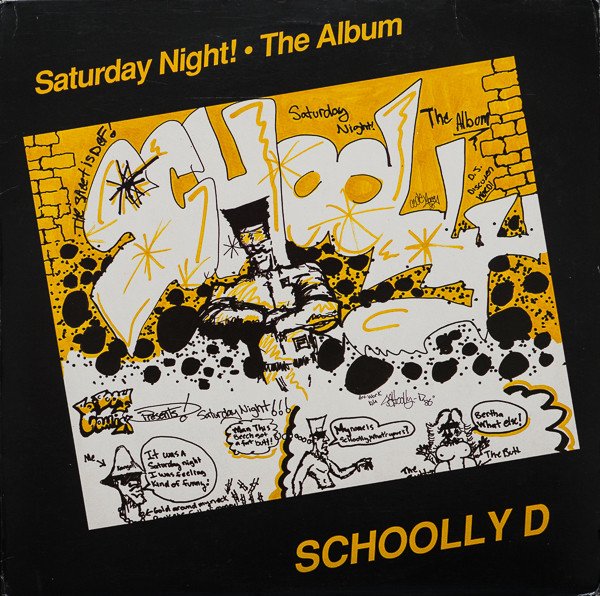
His self-titled debut album came out in 1985, followed by “Saturday Night! – The Album” in 1986, which Jive reissued in expanded form in 1987. Jive also released “Smoke Some Kill” (1988), and “Am I Black Enough for You?” followed in 1989. He continued with “How a Black Man Feels” (1991), “Welcome to America” (1994), “Reservoir Dog” (1995) and “Funk 'N P****” (2000). Over those years he recorded for Jive, Capitol and Ruffhouse, and he worked with the engineer Joe “The Butcher” Nicolo on “Saturday Night!”
Film, television and legacy
Weaver contributed music to several films directed by Abel Ferrara, including “King of New York” and “Bad Lieutenant,” and performed music for the animated series “Aqua Teen Hunger Force.” He has remained active since 1984. His early singles showed that a rapper outside New York could press and sell records independently, and the stark sound and street subject matter of “P.S.K.” gave Philadelphia a direct line into the gangsta rap that followed on the West Coast.
Watch


Discography
Studio albums 10


Collaborative albums 1

Compilations 3


Albums on Breakbeat Archive
Know something we don't?
Suggest a correction
Have a flyer, tape cover or photo of Schoolly D?
Are you Schoolly D? Claim this page
Put this page on your site
Artists, fans and blogs: link this page with the badge or the card. Copy the code and paste it into your site.
Badge

Card